Hiring a certified electrician los angeles property owners can rely on ensures aging wiring systems handle modern energy loads safely. From historic post-and-beam residences near Griffith Observatory to modern builds along Venice, regional infrastructure demands strict adherence to municipal safety codes.

An electrician in los angeles is a state-licensed specialty contractor who installs, tests, repairs, and permits residential and commercial power distribution systems under Title 24 and Los Angeles Department of Building and Safety codes.
Every service reflects the same meticulous attention to detail, whether it's a single job or a larger electrician project across los angeles.
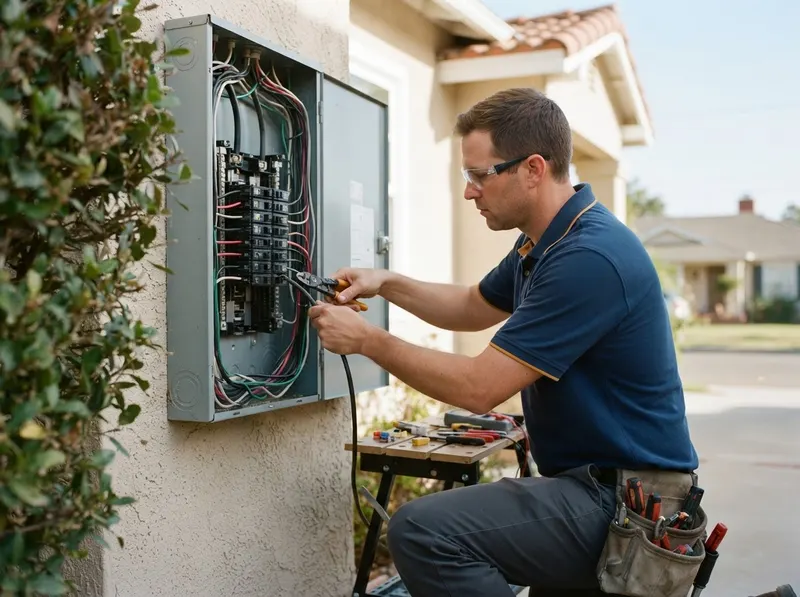
Replaces obsolete 60-amp or 100-amp service equipment with modern 200-amp panels rated to handle heat pumps, Level 2 vehicle charging, and multi-zone HVAC demands, coordinated under LADWP service requirements. The installation scope includes installing an external NEMA 3R rainproof meter enclosure, driving two copper-clad steel grounding electrodes spaced at least six feet apart into earth, and bonding domestic water and gas lines with certified ground clamps. All busbar terminations receive torque-wrench verification according to manufacturer specifications to eliminate high-resistance hot spots. Technicians manage electrical permits with the Los Angeles Department of Building and Safety (LADBS), calculate whole-house non-coincident peak demands using NEC Article 220 formulas, and schedule site coordination with LADWP field engineers for prompt service cutover and meter resealing.
Get a quote →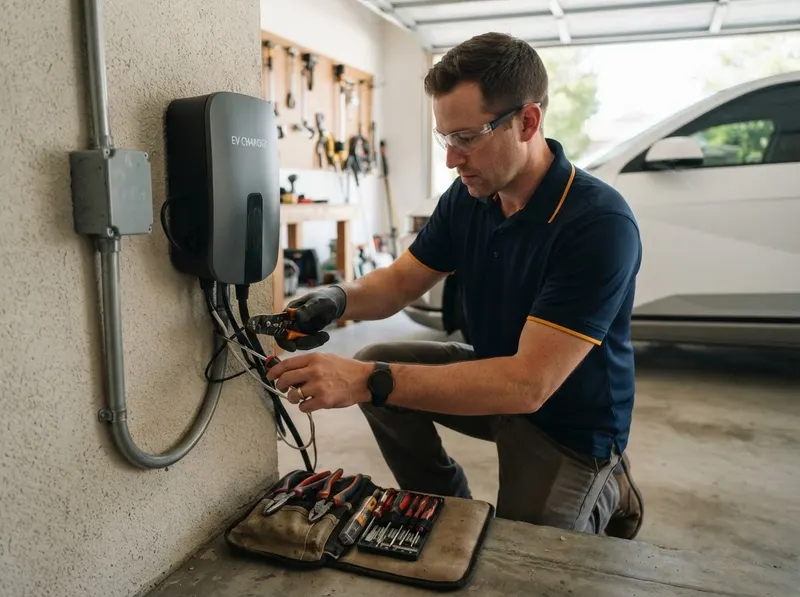
Installs dedicated 240V 40A to 60A branch circuits, industrial NEMA 14-50 receptacles, or direct hardwired home charging units matching factory charging specifications for modern electric vehicles. Service begins with a digital load calculation to evaluate existing panel capacity under continuous-duty constraints, where electrical code mandates sizing conductors and upstream protection at 125% of the vehicle charging draw. Installers route heavy-duty electrical metallic tubing (EMT) or schedule 80 PVC conduit from the electrical distribution point to garage bays, exterior carports, or freestanding pedestals. Wiring configurations use high-temperature THHN copper conductors with dedicated equipment grounding lines, protected by two-pole ground fault circuit interrupters (GFCI) to ensure reliable thermal performance during sustained eight-hour overnight charging cycles.
Get a quote →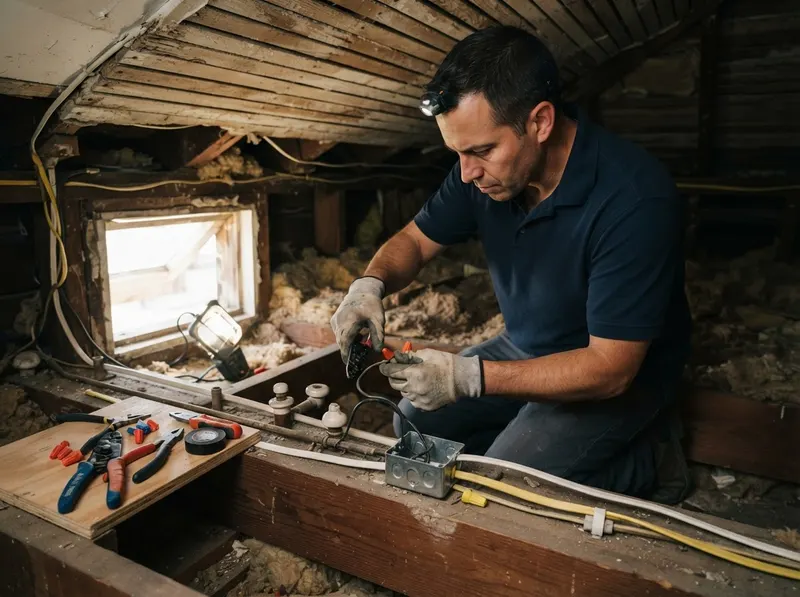
Replaces deteriorated, ungrounded cloth-jacketed wiring systems common in pre-1950 properties with modern Romex NM-B conductors, improving fire safety and ensuring insurance compliance. Technicians isolate active open-air conductors secured to ceramic porcelain knobs and tubes running through floor joists and wall cavities, systematically disconnecting hazardous ungrounded connections. Using precision endoscopes and non-destructive wall-chasing methods, crews draw new multi-conductor copper cables to every switch box, luminaire, and receptacle point. The modern circuit paths feature integral grounding conductors and split neutral returns, fully eliminating high-risk open-neutral floating voltage spikes and bringing historic structures into compliance with current California building standards.
Get a quote →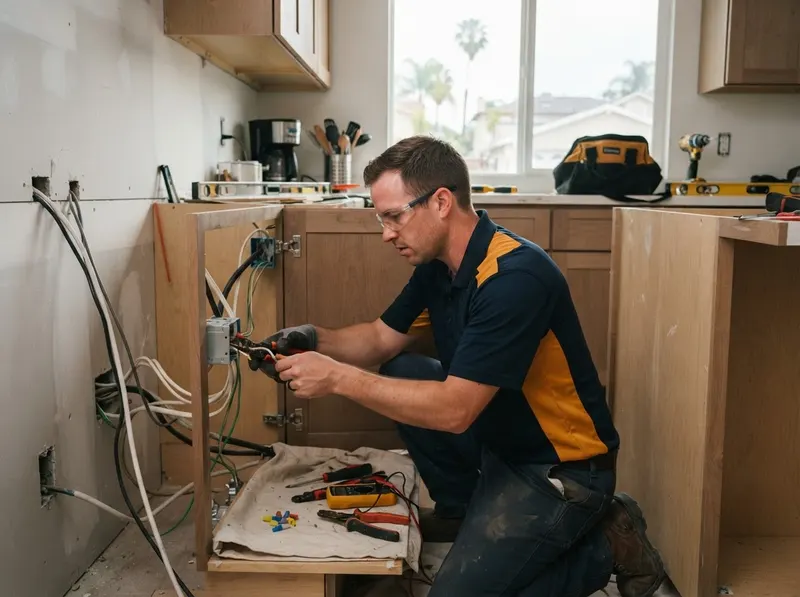
Runs individual, isolated 120V and 240V lines from the panel directly to high-draw household units including induction cooktops, secondary subpanels, pool pumps, and backup power equipment. Dedicated circuits prevent the nuisance tripping caused when high-draw heating elements, compressors, and motor assemblies share branch conductors with lighting and living area receptacles. Technicians install dedicated 30-amp to 50-amp dual-pole circuit breakers in the distribution panel, pulling dedicated homerun runs through concealed pathways using heavy-gauge Romex or armored MC cable. Each termination point is fitted with a specialized disconnect, such as industrial locking receptacles, pull-out safety switches for exterior HVAC compressors, or hardwired terminal blocks designed to handle continuous thermal expansion.
Get a quote →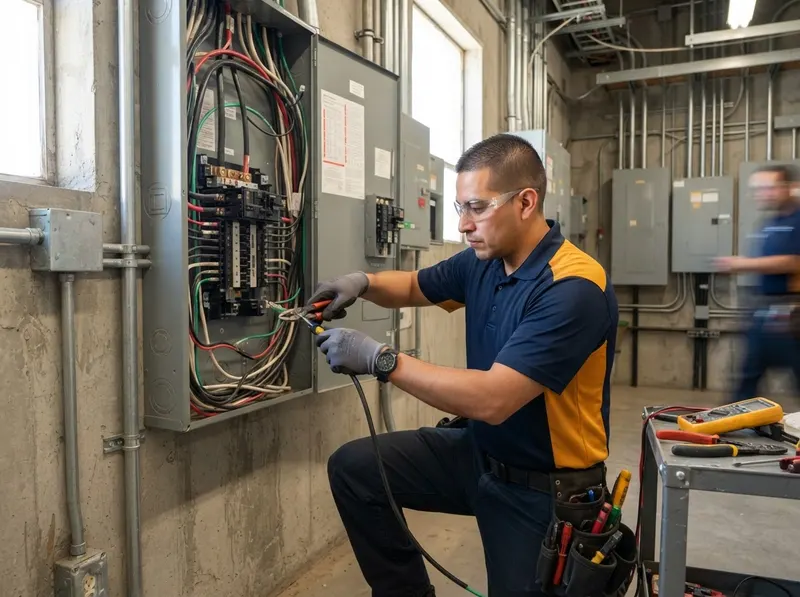
Delivers three-phase 120/208V and 277/480V panel balancing, tenant improvements, motor control center updates, and Title 24 commercial energy compliance for business spaces. The scope encompasses installing heavy-duty switchgear, distribution transformer step-downs, commercial bus ducts, and dedicated feeder conduits across multi-tenant buildings and commercial kitchens. Certified technicians execute digital phase-load balancing to prevent neutral conductor overheating and eliminate unmetered harmonic distortions generated by switched-mode computer power supplies and variable-frequency motor drives. All installations conform to stringent municipal life-safety criteria, integrating emergency illumination egress circuits, illuminated exit signage battery networks, and automated shunt-trip interlocks linked directly to kitchen fire-suppression hoods.
Get a quote →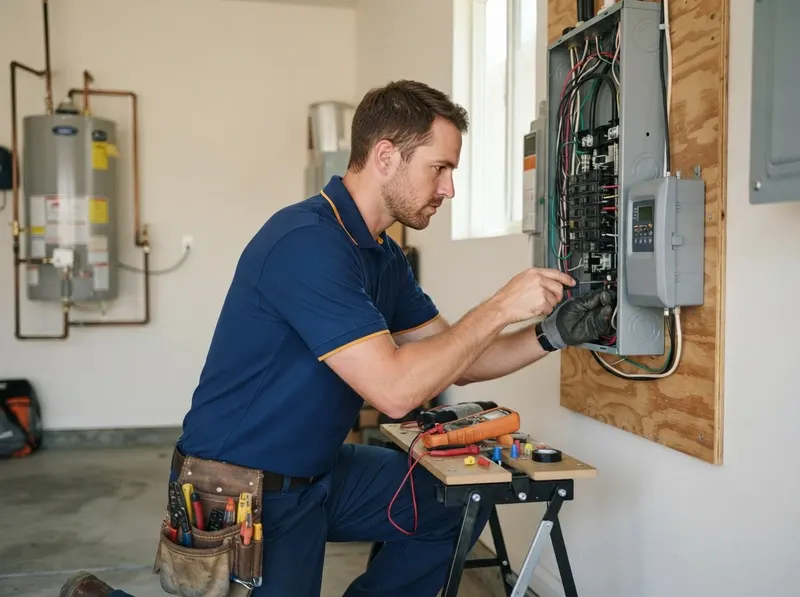
Installs Type 1 and Type 2 panel-mounted surge suppressors capable of clamping 50kA to 100kA voltage spikes caused by external grid fluctuations or major home motor cycling. Type 1 surge protection devices (SPDs) are mounted directly between the secondary side of the utility transformer and the main service disconnect, safeguarding against high-energy external transients such as lightning strikes or LADWP grid-switching events. Type 2 suppressors are installed directly on the load side of the main service panel, managing internal inductive voltage spikes generated by cycling HVAC compressors, pool pumps, and refrigeration motors. These units employ matched metal oxide varistors (MOVs) and thermal cutoffs, providing microsecond response times that protect sensitive microprocessors in smart appliances, computers, and solar inverters.
Get a quote →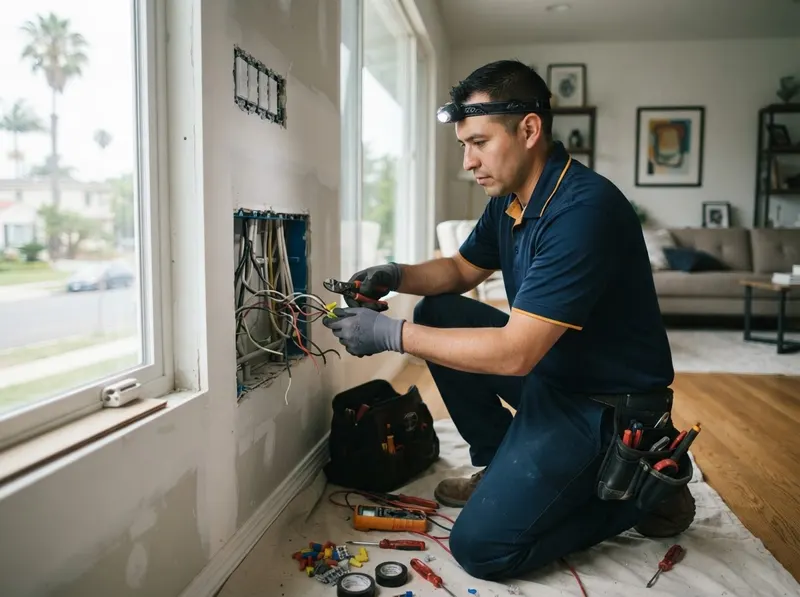
Configures smart dimmers, occupancy sensors, low-voltage line drivers, and architectural LED systems that satisfy strict California Title 24 residential energy efficiency mandates. Technicians replace obsolete mechanical switching with programmable microprocessor-controlled lighting banks, integrating digital low-voltage (0-10V) or phase-adaptive dimmers that eliminate high-frequency LED bulb flicker. All living areas, corridors, and exterior perimeter circuits are calibrated with vacancy sensors and daylight-harvesting photocells to ensure zero non-essential power draw during daytime hours. In conjunction with local switching hardware, technicians terminate system wiring inside dedicated low-voltage enclosure hubs, establishing clean, interference-free control buses compatible with centralized home automation frameworks.
Get a quote →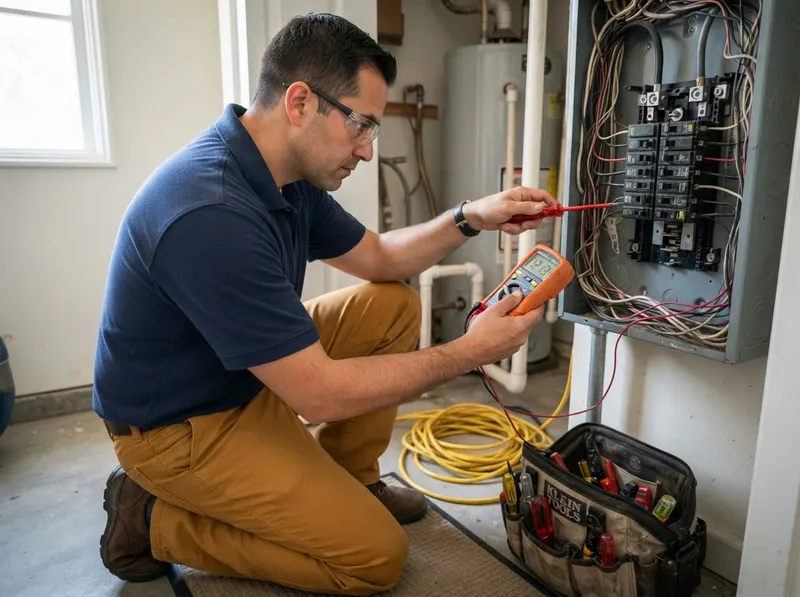
Provides systematic fault isolation, circuit-tracer diagnostics, and emergency stabilization for burning wire odors, dead circuits, flickering feeds, or damaged weatherhead entries. Field personnel utilize digital insulation resistance testers (megohmmeter), true-RMS digital multimeters, and high-resolution thermal imaging cameras to pinpoint hidden resistive faults within walls and utility connection terminals. The diagnostic protocol identifies failing main breaker lugs, degraded utility neutral splices, busbar arc-tracking damage, and concealed junction box failures without excessive structural penetration. Once the primary failure is isolated, technicians clear thermal hot spots, replace damaged hardware with compliant components, and restore safe operational power across the residential or commercial footprint.
Get a quote →You get a firm, itemized quote for your electrician before any work begins, no surprises, no pressure.
Careful prep, tidy work, and a full cleanup when we are done. We treat your home and belongings like our own.
The same trusted, background-checked team from the first call to the final check.
If a home trips breakers when running an electric oven alongside air conditioning, select a 200-amp or 400-amp main electrical panel upgrade. If the primary objective is charging a plug-in electric vehicle overnight at home, install a dedicated 50-amp 240-volt branch circuit with an industrial receptacle or hardwired station. The trade-off is overall project cost versus operational capacity: a single 240-volt circuit installation is fast and economical at $750 to $1,800, but it does not expand the total household electrical overhead. Installing a high-amperage Level 2 charger on an existing 100-amp panel risks main breaker overloads during evening peaks. Conversely, a comprehensive 200-amp panel replacement requires utility disconnect authorization from LADWP, dedicated LADBS permitting, and an investment between $2,800 and $4,900, yet it permanently resolves power limitations for future additions like heat pumps, induction ranges, and solar storage systems.
If localized circuit isolation is required for an accessory dwelling unit (ADU), garage workshop, or dedicated second-story server infrastructure, installing an intermediate 60-amp to 100-amp subpanel provides an optimal balance between structural accessibility and feeder management. A subpanel adds branching versatility without replacing the primary utility meter base, provided the upstream service panel possesses sufficient busbar ampacity. However, if the underlying service entrance conductors, utility drop, or main meter base remain rated at 100 amps or lower, adding a subpanel merely relocates breaker capacity without resolving source amperage constraints. Under these conditions, executing a full 200-amp or 400-amp service modernization represents the only viable technical path to satisfy National Electrical Code (NEC) continuous load standards.
When evaluating aging branch infrastructure in pre-1950 properties, choosing between progressive remediation and complete branch conductor replacement dictates long-term electrical reliability. Progressive remediation focuses on deploying Arc Fault Circuit Interrupter (AFCI) and Ground Fault Circuit Interrupter (GFCI) protection devices at the head of existing knob-and-tube or early cloth-sheathed circuits. This configuration mitigates immediate electrocution and electrical arc fire hazards at a moderate price point of $1,200 to $2,600 per living zone, minimizing wall openings in historic plaster. The trade-off is functional capacity: legacy two-wire systems lack a dedicated low-impedance equipment grounding path, restricting equipment compatibility and often complicating residential insurance underwriting. Conversely, a comprehensive whole-home rewiring using modern copper NM-B cabling represents an investment of $8,000 to $18,500, requiring coordinated patching and rough-in inspections, but it delivers absolute code compliance, provides surge grounding paths for sensitive electronics, and permanently eliminates brittle insulation fire risks.
Every project gets a firm, written price after a free on-site visit. Ranges below for orientation.
Tell us about your electrician job and we'll send a clear, written quote, usually the same day. Or just call and talk to a real los angeles pro.
(840) 220-2859
Properties across Los Angeles encounter specific electrical constraints based on local terrain, regional seismic activity, microclimates, and building era. Craftsman bungalows in Highland Park and Spanish colonials in Los Feliz frequently retain ungrounded wiring systems that struggle under modern 200-amp demands, while coastal homes in Venice and Mar Vista face marine-layer corrosion that deteriorates exterior meter bases and exposed weatherhead connections. Throughout the San Fernando Valley, sustained summer heat waves strain transformers and push older residential air conditioning circuits past their thermal tolerance, making seasonal service panel inspections and LADBS-compliant upgrades essential across Los Angeles County. In hillside properties across Silver Lake, Echo Park, and Studio City, service lateral runs often traverse steep gradients where soil movement and seismic settling can physically pull overhead drop attachments away from fascia boards or stress underground conduit couplings. Technicians operating in these zones must install reinforced structural backer plates and heavy-duty service heads to resist mechanical strain. In neighborhoods like Westwood and Boyle Heights, older multi-family structures frequently rely on multi-meter center arrangements with obsolete push-in breaker designs that no longer meet insurance carrier safety underwriting requirements. Navigating local governance requires intimate familiarity with the Los Angeles Department of Building and Safety (LADBS) permitting portal and LADWP Electric Service Requirements (ESR). Standard utility upgrade procedures in Los Angeles mandate strict clearance envelopes around electric meters: a minimum working space 30 inches wide, 36 inches deep, and 78 inches high, free of gas meters, hose bibs, and air conditioning compressors. Furthermore, with the aggressive local adoption of electric vehicles, rooftop solar, and heat pump HVAC conversions driven by regional electrification mandates, calculating panel service loads using Title 24 energy standards is critical to avoid overloading regional distribution transformers during summer heat peaks.
Free estimates for los angeles & the surrounding area.
 Elite Electrician